Spot and avoid scams

How to avoid scams
- If it sounds too good to be true, it probably is. Be extremely cautious of investment offers that guarantee a high return.
- Should you receive an unexpected message via email, SMS, WhatsApp, Facebook, or LinkedIn, even if it’s from someone you know, be careful when opening any links or attachments. It might be best to avoid responding to the message but don’t share any personal information if you do.
- When opening links, take note of the structure of the link. If the spelling, domain, or anything in the link doesn’t seem right, verify them by independently searching the website or the business name.
- If you’ve witnessed a scam that uses Sanlam or our adviser network, report it and seek assistance by contacting Sanlam's Client Care Centre +27 860 726 526.
What to look out for
Beware of messages:
- Urge money transfers to unfamiliar accounts
- Demanding upfront payments
- Contain language errors
- Promise rapid, high returns
- Suspicious or unusual email addresses
- Pressure you to act quickly
Scams to watch out for
Verify calls from Sanlam by calling 0860 726 526 and not the contact numbers provided during a call.
We would never ask you to send money to any account for safekeeping. Always verify any suspicious instructions by calling 0860 726 526.
Never give out these details over the phone. Report any suspicious activity to safeguard against potential fraud.
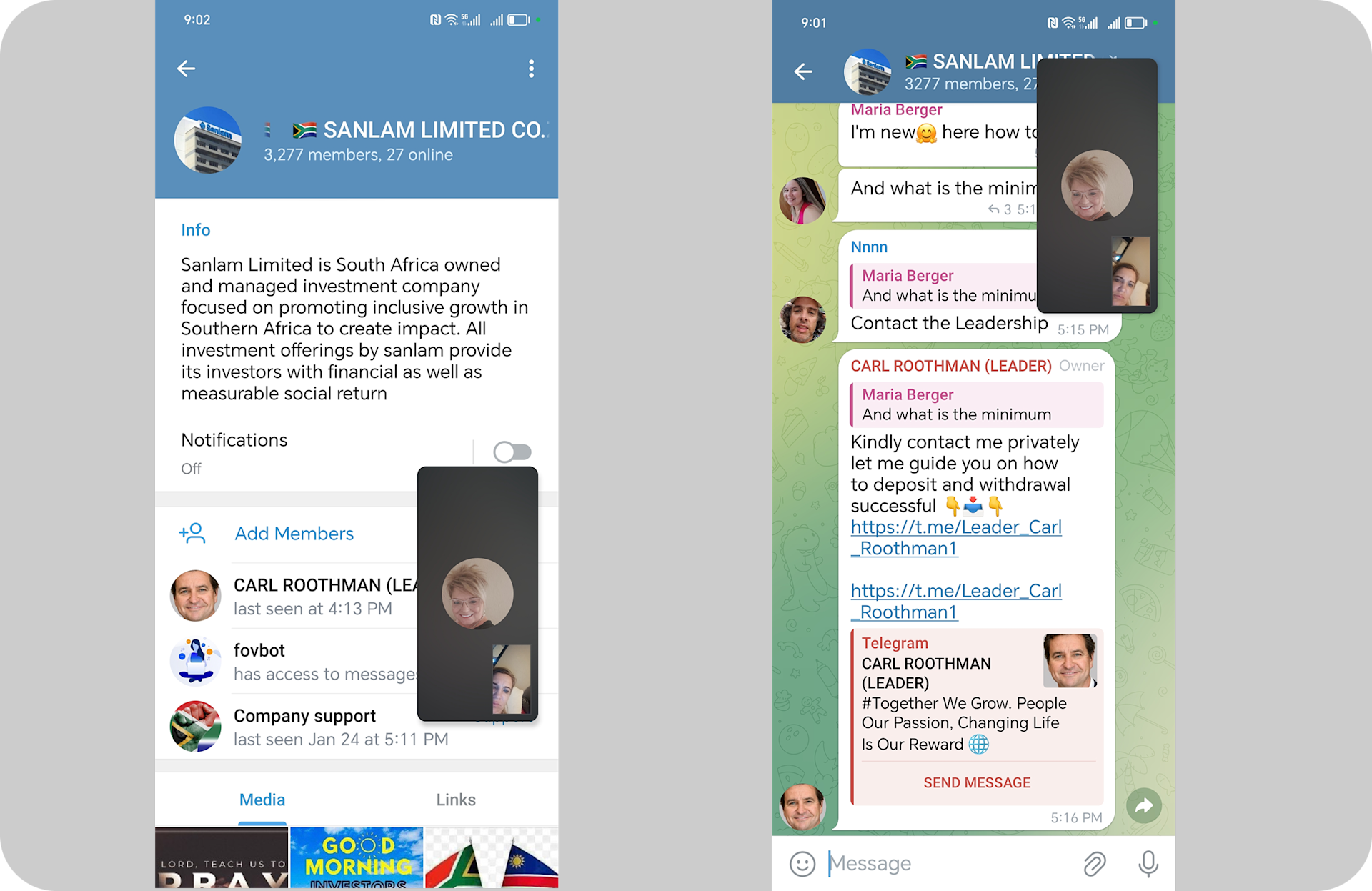
Impersonation of Sanlam on Telegram
A malicious third party is purporting to be or act on behalf of Sanlam through the unauthorised use of Telegram as a communication channel.
Please be informed that Sanlam does not conduct business via Telegram, does not have a Telegram account, and that this is indeed a scam.
Safeguard your personal information by:
- Never sharing personal or financial information through unofficial channelsIf you are ever in doubt if a channel is official, visit our website on www.sanlamonline.co.za or call 0860 726 526 (0860 SAN LAM)
- Never give out a One-Time PIN over the phoneThese can be used to gain access to your account
- Never share your log in details with anyoneThese can be used to access your account
Changing bank account details scam
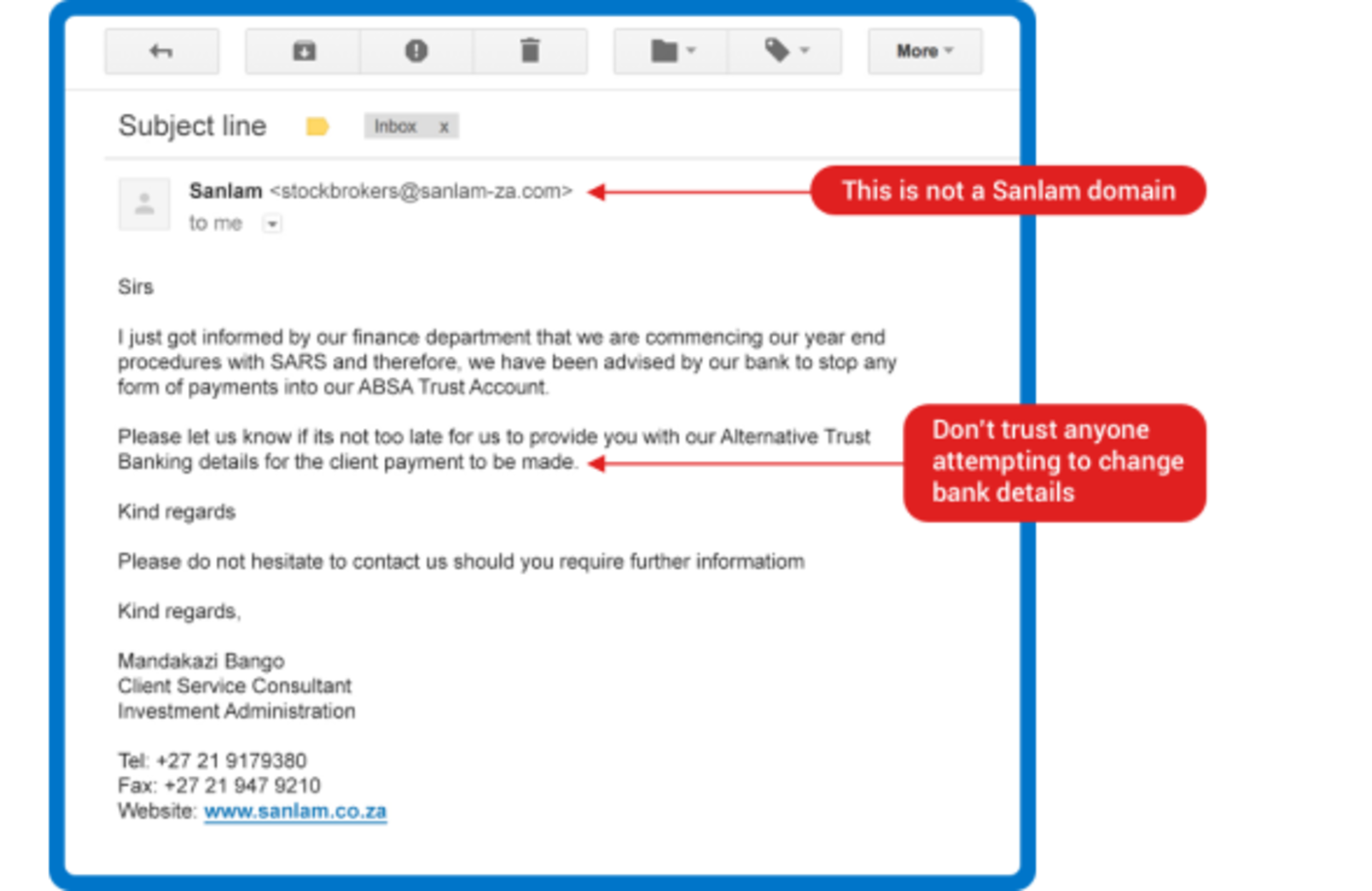
The "Change of Bank Account Details Scam" is an attempt to get victims to pay money to a fraudulent bank account. Scammers often send an email or letter, pretending to be a legitimate business in an effort to change banking details.
If an email doesn't come from a legitimate Sanlam domain and someone tries to alter banking information, exercise caution and don't trust such requests.
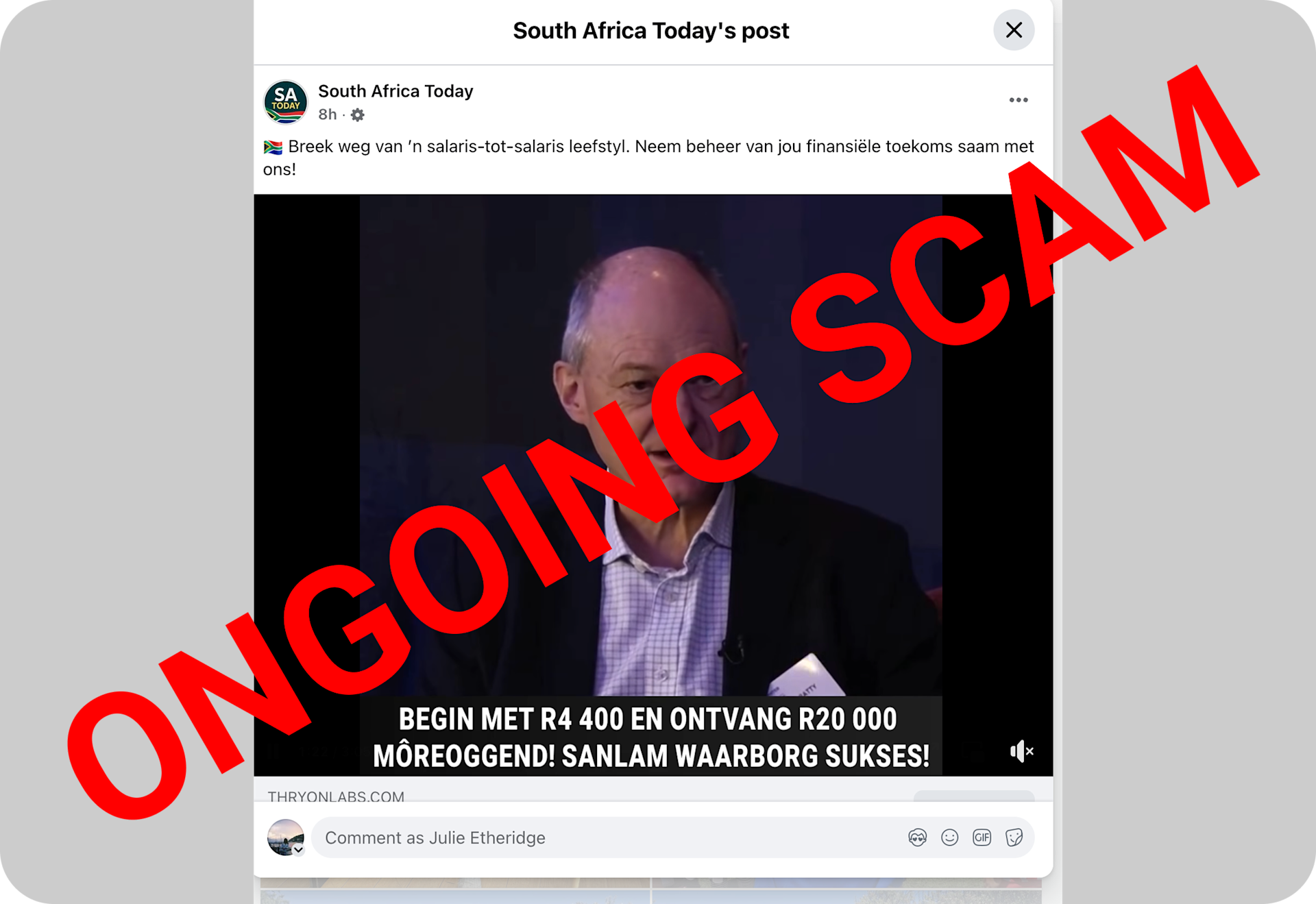
Fake investment & impersonation scam
Sanlam will never ask you to invest through chat apps or social media. Sanlam executives will never contact you directly to offer investments. Journalists will never promote or facilitate investments. Always verify with Sanlam or the FSCA, and report impersonation attempts to sanlam@tip-offs.com.

Email hacking scam
Hackers may use phishing or compromised login details to get access to your email account. Once they gain access, they’ll use it to send fake instructions to Sanlam, and erase evidence.
Phishing is a technique scammers use to get sensitive personal information, like banking and login details. There are various methods involved, including sending emails with deceptive links or attachments, and phone calls or messages where they impersonate a trusted business.
Sanlam confirms high-risk instructions via phone to prevent fraud.
Resources for staying safe online:
